

Tomato
Solanum lycopersicumFull sun
A bed starts with one plant. Find its perfect growing company.







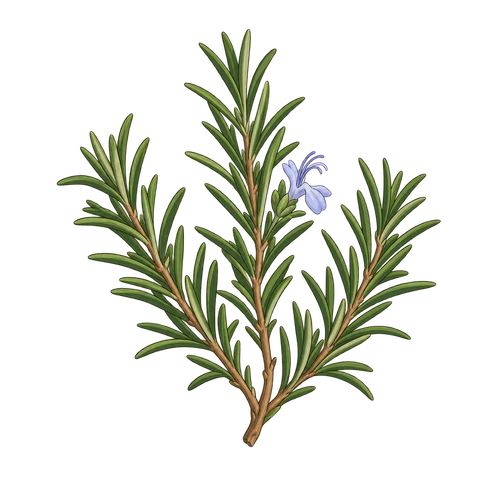




























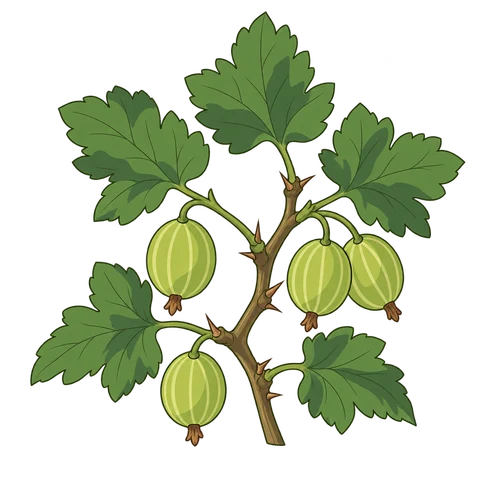



















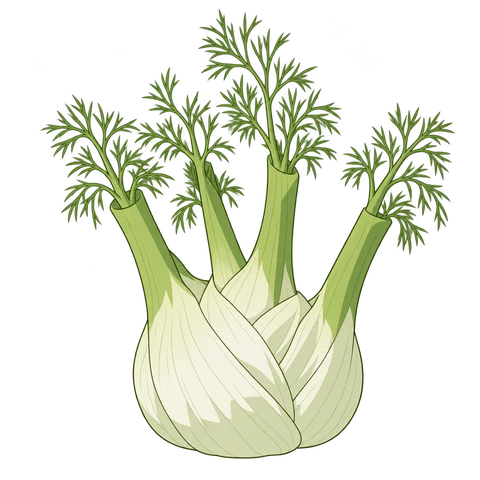










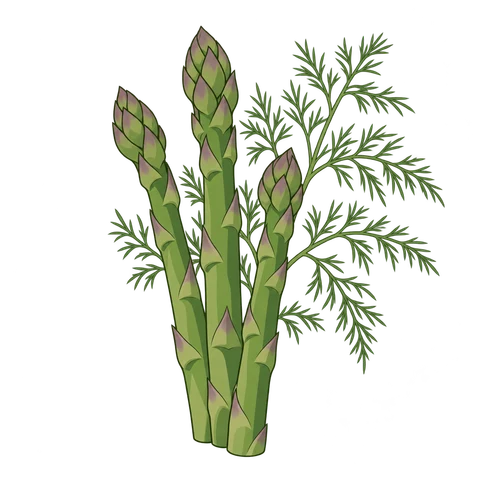










Scroll back through 470 million years. Discover the roots of the plants around you.
Tomatoes, basil and sunflowers belong to the flowering plants. Their family tree reaches back into the age of dinosaurs.
Fossil pollen from Antarctica places the daisy family around 80 million years ago. Sunflowers and daisies are living relatives of this ancient lineage.
Early flowering plants appear in the fossil record. Flowers and seeds enclosed in fruits open a new chapter; their exact evolutionary origin is still debated.
Conifers have a history stretching back more than 300 million years. Their seeds develop without an enclosing fruit, unlike those of flowering plants.
The lineage of leptosporangiate ferns dates to roughly the start of the Carboniferous. Ferns reproduce by spores; many familiar fern groups diversified much later.
Tiny fossil spores provide evidence of early land plants around 470 million years ago. Their exact appearance and relationships remain uncertain; mosses offer a living comparison.
Ma = million years ago. Dates are approximate milestones for lineages or fossils, not the ages of living species. Illustrations show living relatives or simplified forms. The timeline is not to scale.
Draft before publication. Information on hosting logs and web statistics still needs to be checked against the actual setup.
Andreas Gebert
Waldburgstraße 22
70563 Stuttgart
Germany
For privacy enquiries: admin@noqtis.com
This notice applies to floraka.com. Floraka offers a plant catalogue and garden-bed planning without a user account. The application does not transmit your beds, quantities, bed names, growing conditions or search filters to a server. However, technical connection data is processed when you access the website.
The hosting provider is ALL-INKL.COM – Neue Medien Münnich, proprietor René Münnich, Hauptstraße 68, 02742 Friedersdorf, Germany. When you access the site, your IP address, the requested address and technical details of the browser request in particular are transmitted to the web server. Without this connection, the page cannot be delivered.
Providing and securing the website serves our legitimate interest in a reliably accessible service; the legal basis is Article 6(1)(f) GDPR.
Hosting logs are retained for seven days. Whether additional server-side web statistics are enabled still needs confirmation.
Provider information: ALL-INKL privacy information.
Beds, plant quantities, bed names, growing conditions and the active bed are saved in your browser’s local storage. This makes your plan available again on your next visit using the same device and browser. Floraka does not set an automatic expiry for this. The data remains until you change it or delete the website data in your browser settings; the browser may also remove it itself.
Search text and the selected plant category are kept in the tab’s session storage. They survive a reload; this storage normally ends when the tab closes. Your browser’s session restoration may preserve them for longer.
These storage operations provide the requested local planning function (section 25(2), no. 2 TDDDG). To the extent that the stored information is personal data, processing is based on Article 6(1)(f) GDPR, our interest in usable planning that can be continued locally.
You can delete all website data for floraka.com in your browser. This also removes saved beds. Older local data from previous Floraka versions is likewise removed completely only by deleting the website data. If you block local storage, the application may be unable to save your plan permanently.
Local garden-bed planning does not require cookies. Cookies for optional Matomo statistics are used only after you consent. No advertising or social-media trackers are integrated. Fonts and plant images are delivered with the website; this does not involve requests to Google Fonts or other image and font providers.
Links to plant sources and other websites are ordinary links. Your browser connects to the linked provider only when you open them. That provider’s privacy notices apply to its processing.
With your consent, we use Matomo via analytics.noqtis.com (website ID 9) to analyse page views and link clicks. This involves processing, in particular, visited pages, technical browser and device information, and the IP address needed for the connection. Matomo may set cookies to recognise visits. Our integration does not transmit bed names, plant quantities, growing conditions or search filters as analytics data.
Without consent, the Matomo script is not loaded. Your choice is stored under floraka.analytics-consent.v1 in your browser for up to 180 days. You can decline statistics or withdraw your consent with effect for the future at any time through “Privacy settings” in the footer. The website remains fully usable without statistics.
The currently integrated Matomo tracker uses these default cookie lifetimes: visitor identifier (_pk_id) up to 393 days, session (_pk_ses) 30 minutes, and referral information (_pk_ref) up to 182.5 days. These cookies may be set after your consent. The consent choice stored for 180 days is kept separately in local browser storage and is not a cookie. Browsers may further shorten cookie lifetimes.
Still to be confirmed: The server-side Matomo settings applying to Floraka for IP masking, data retention and hosting of the analytics installation. Default cookie lifetimes were checked in the integrated tracker; this does not verify the server settings.
You can send us a message through “Contact” in the footer. Your email address and message are required; providing your name is optional. This information is transmitted over an encrypted connection to the Floraka web server at ALL-INKL and forwarded by email to admin@noqtis.com. Your email address is used as the reply-to address. No automatic reply is sent. Without an email address and message, the form cannot submit your enquiry; alternatively, you can email us directly.
We use this information to handle your enquiry. The legal basis is Article 6(1)(f) GDPR, our legitimate interest in responding to incoming enquiries; for contractual or pre-contractual matters, it is Article 6(1)(b) GDPR. The information in the following section, “Contact by email”, applies to message recipients and deletion criteria. The form does not create an additional message database.
The technically necessary session cookie “floraka_contact” is set only when you submit the form. Together with a security token valid for up to one hour, it protects against requests triggered by third parties. The cookie applies to the API path and is configured as a session cookie without a fixed expiry; browsers can restore sessions. The server-side session contains the security token and its creation time, but no form content. Its cleanup follows the hosting provider’s PHP session configuration, whose actual retention period is still to be confirmed. Cookie access serves the expressly requested message transmission (section 25(2), no. 2 TDDDG) and is independent of optional statistics.
To protect against automated misuse, the server checks a hidden form field and limits sending attempts to one per minute and five per hour per network address. For this purpose, a hash derived from the IP address and timestamps are processed in a protected file outside the publicly accessible website directory, without a name, email address or message. Timestamps are taken into account for one hour; expired entries are removed upon the next valid sending attempt and may remain stored until then. The basis for these protective measures is Article 6(1)(f) GDPR, our legitimate interest in securing the contact service. No external CAPTCHA or form service is integrated.
If you write to us, we process your email address, the content and any information and attachments you include to handle your enquiry. Contacting us is voluntary. The legal basis is Article 6(1)(f) GDPR; for contractual or pre-contractual matters, it is Article 6(1)(b) GDPR. Messages are deleted when the matter is concluded and no statutory retention duties or necessary evidence require otherwise.
The admin@noqtis.com mailbox is operated at ALL-INKL.COM – Neue Medien Münnich. The provider named above processes incoming and outgoing messages as the email service provider.
Subject to the GDPR, you may request access, rectification, erasure, restriction of processing and, where applicable, data portability. You may withdraw consent with effect for the future. To do so, use the contact address given above.
Objection: Where processing is based on legitimate interests, you may object on grounds relating to your particular situation (Article 21 GDPR). We will then examine whether compelling legitimate grounds or legal claims justify continued processing.
You may lodge a complaint with a data protection supervisory authority, particularly where you live or work or where the suspected infringement occurred. For the operator in Stuttgart, the competent authority is the State Commissioner for Data Protection and Freedom of Information Baden-Württemberg.
Floraka does not make automated decisions about you that have legal or similarly significant effects. Plant ratings concern growing conditions, not personal characteristics.